Sep 8th, 2026


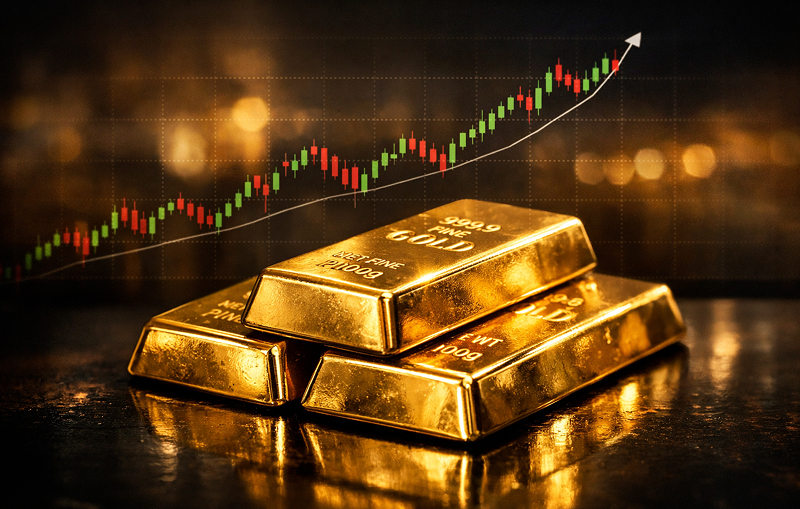
Gold Trading in Makkah, Saudi Arabia: A Practical Guide for Traders
Gold Trading in Makkah, Saudi Arabia
Makkah is one of Saudi Arabia’s most important commercial and cultural centres, with economic activity influenced by retail, hospitality, tourism, and services. Alongside traditional interest in gold, modern financial platforms have made it possible for traders to follow gold prices through international markets.
For anyone exploring Gold Trading in Makkah, Saudi Arabia, understanding the difference between owning physical gold and trading gold based on price movements is an important first step.
Gold can react rapidly to global economic developments, so traders need more than market enthusiasm. They need a clear process for analysing opportunities and controlling risk.
Understanding the Modern Gold Market
Gold is traded internationally and its price is influenced by events taking place across major financial markets.
Unlike physical gold, where the focus may be on ownership and long-term value, financial trading generally focuses on price movements over a chosen timeframe.
The exact product available to a trader depends on the platform and provider. Before trading, it is important to understand the product's contract terms, costs, leverage, and associated risks.
What Makes Gold Prices Move?
Gold can respond to several factors at the same time.
Interest-Rate Expectations
Central-bank policy is closely watched by financial-market participants. Changes in interest-rate expectations can influence gold prices and may create periods of increased volatility.
US Dollar Movements
Gold is widely priced in US dollars. Changes in the dollar can therefore affect the international price of gold.
Inflation and Economic Data
Inflation reports, employment figures, economic growth data, and other major releases can change market expectations. Gold prices may react quickly when actual figures differ significantly from forecasts.
Global Uncertainty
Geopolitical developments and economic uncertainty can influence investor sentiment. These events may create sharp movements, making risk management particularly important.
A Better Way to Analyse Gold
Successful analysis does not have to involve dozens of indicators.
A trader can begin by looking at the larger market picture and then gradually move into more detailed chart analysis.
Consider three areas:
Market direction: Is gold generally trending upward, downward, or moving sideways?
Important price levels: Where has price previously reacted strongly?
Upcoming events: Are there major economic announcements that could change market conditions?
This simple framework can help traders avoid entering positions without understanding the surrounding environment.
Technical Analysis for Gold Traders
Charts can help identify potential trading setups.
Common tools include:
Support and resistance
Trend lines
Moving averages
Candlestick patterns
Breakout levels
Price-action analysis
The purpose of technical analysis is not to predict the future with certainty. Instead, it can help traders define possible scenarios and establish clear conditions for entering or exiting a position.
A technical setup should also be considered alongside major economic news.
Choosing a Trading Timeframe
Your trading timeframe should match your lifestyle and experience.
Intraday traders may open and close positions within the same day, requiring more frequent monitoring.
Swing traders generally look for larger movements that may develop over several days.
Longer-term traders may focus on broader economic trends and hold positions for extended periods.
For Gold Trading in Makkah, Saudi Arabia, there is no single timeframe that is automatically better. The more important question is whether the chosen approach can be followed consistently.
Risk Management Before Profit Targets
Gold can move quickly, particularly when important economic information is released.
This makes risk management a central part of any trading plan.
Before opening a position, traders should consider:
How much capital they can afford to risk
Appropriate position size
Where the trade idea becomes invalid
Whether leverage is suitable
The potential impact of market volatility
Total exposure across open positions
A stop-loss can be useful for managing downside risk, but it cannot guarantee a specific execution price under all market conditions.
Avoiding Emotional Decisions
A profitable trade can create overconfidence. A losing trade can create frustration.
Both emotions can influence the next decision.
For example, after a loss, a trader may increase position size to recover the money quickly. After a successful trade, they may become too aggressive because they believe the next opportunity will produce another gain.
Neither approach is a substitute for a trading plan.
Following predefined rules can help keep individual results from controlling future decisions.
Keep Your Trading Records
A trading journal is one of the simplest ways to improve over time.
For every position, record:
Entry and exit
Position size
Reason for entering
Stop-loss and target
Market conditions
Final result
Mistakes or lessons
After reviewing a larger number of trades, patterns become easier to identify.
You may discover that certain setups work better for your strategy or that particular habits repeatedly create losses.
Learn Before Increasing Your Exposure
New traders should avoid treating their first successful trades as proof that they have mastered the market.
Gold trading requires continued learning and practice. Studying market structure, economic events, technical analysis, and risk management can help build a stronger foundation.
Tackto FX can be considered as a learning resource for traders who want to develop a more structured understanding of financial markets.
The focus should be on building a repeatable process rather than searching for guaranteed returns.
Final Thoughts
Gold Trading in Makkah, Saudi Arabia can provide access to a globally followed financial market, but it also requires careful preparation.
Gold prices can respond to interest rates, currency movements, inflation, economic releases, and global uncertainty. Understanding these factors can help traders interpret market conditions more effectively.
The strongest foundation comes from combining market knowledge with realistic expectations, appropriate position sizing, disciplined execution, and continuous review.
Trading should be approached as a high-risk financial activity, not as a guaranteed source of income.
Risk Disclaimer
Gold and other financial instruments involve significant risk and may result in the loss of capital. Past performance does not guarantee future results. Traders should understand the risks involved and consider their financial circumstances and risk tolerance before making financial decisions.