Sep 8th, 2026


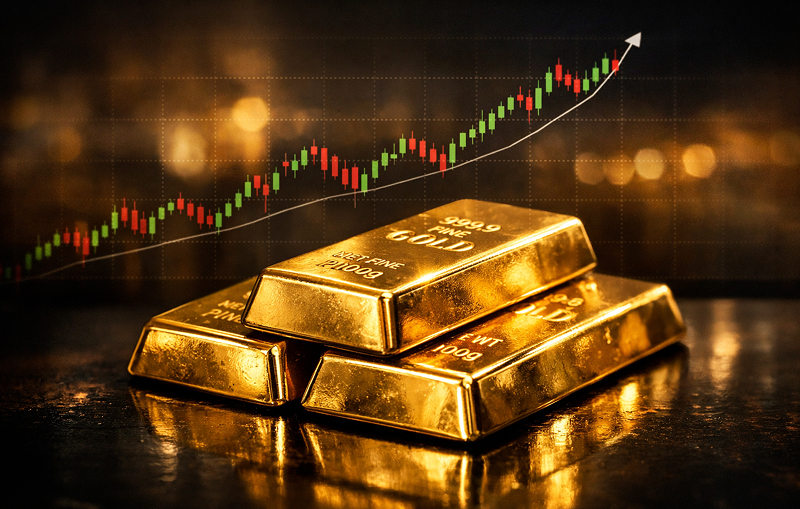
Gold Trading in Kuwait: A Practical Guide for Modern Traders
Gold has always attracted attention across the Gulf, both as a physical asset and as a financial market. Today, traders in Kuwait can also follow international gold prices through online trading platforms.
However, Gold Trading in Kuwait is not simply about watching the price and deciding when to buy or sell. Gold reacts to global economic conditions, currency movements, interest-rate expectations, and investor sentiment.
Understanding these factors can help traders develop a more informed and disciplined approach.
How the Gold Market Works
Gold is traded across international financial markets throughout the week. Its price can change continuously as traders respond to economic announcements and developments around the world.
There is an important difference between buying physical gold and trading a financial instrument based on gold prices.
Physical gold is generally purchased for ownership, jewellery, or longer-term wealth considerations. Financial trading focuses primarily on price movements and may involve leverage, which can increase both potential gains and losses.
Before trading, it is important to understand the specific product, fees, leverage, and terms offered by the provider.
What Influences Gold Prices?
A number of global factors can affect gold.
US Dollar Movements
Gold is commonly quoted in US dollars. Changes in dollar strength can therefore influence the international price of gold.
Interest Rates
Expectations around central-bank policy can have a significant effect on financial markets. Gold may react when traders adjust their expectations about future interest rates.
Inflation
Inflation figures can influence investor expectations and market sentiment. Major inflation announcements may also cause increased short-term volatility.
Economic Conditions
Employment figures, economic growth data, central-bank statements, and other important reports can affect gold prices.
Geopolitical Developments
Periods of international uncertainty can lead to changes in investor behaviour and create sharp movements in gold.
A Practical Approach for Kuwait Traders
A good trading process starts with preparation.
Before opening a position, traders can review the current market trend, identify important price levels, check upcoming economic events, and establish their risk limits.
Instead of asking only, “Will gold go up or down?”, consider several possible scenarios:
What happens if price continues the current trend?
What happens if price reverses?
Where would the trade idea become invalid?
How much capital is at risk?
Is the potential reward reasonable compared with the risk?
Thinking in scenarios can encourage more structured decisions.
Choosing the Right Trading Style
Different trading styles require different levels of time and attention.
Day trading involves opening and closing positions within a shorter timeframe and usually requires more active monitoring.
Swing trading focuses on larger price movements that may develop over several days.
Longer-term trading concentrates on broader market trends and economic conditions.
For Gold Trading in Kuwait, the best approach is not necessarily the one with the most trades. It is the approach that matches the trader's schedule, experience, and risk tolerance.
Using Technical Analysis
Technical analysis can help traders understand historical price behaviour and identify potential setups.
Some commonly used methods include:
Support and resistance
Trend analysis
Moving averages
Candlestick patterns
Breakouts
Price-action analysis
These tools can help establish entry and exit conditions, but they cannot guarantee the future direction of gold.
Economic news should also be considered because unexpected announcements can quickly change market conditions.
Risk Management Is Essential
Gold can experience sharp movements, especially around major economic announcements.
For this reason, risk management should be decided before entering a trade.
Traders should consider:
Appropriate position size
Maximum acceptable loss
Stop-loss placement
Leverage exposure
Available trading capital
Total risk across open positions
Avoid risking money needed for essential expenses. A trading account should be funded with capital that you can afford to lose.
A stop-loss may help control downside risk, but market conditions can affect execution, particularly during periods of extreme volatility.
Don't Let Emotions Take Over
Trading decisions can become difficult after a series of wins or losses.
A losing trade may tempt someone to immediately enter another position to recover the loss. A winning trade may create overconfidence and encourage excessive risk.
Both reactions can move traders away from their original strategy.
Having predefined rules for entries, exits, and risk can make it easier to remain consistent when market conditions become stressful.
Keep Improving Your Process
A trading journal can help identify what is working and what needs improvement.
Record the reason for each trade, the setup, entry and exit, position size, risk level, market conditions, and final outcome.
After reviewing several trades, you may notice patterns in your decisions that are difficult to recognise when looking at individual positions.
Continuous learning is equally important. Tackto FX can be considered as a structured learning resource for people looking to strengthen their understanding of financial markets and trading concepts.
Final Thoughts
Gold Trading in Kuwait can provide access to a globally followed market, but successful participation requires preparation and realistic expectations.
Gold prices are influenced by currencies, interest rates, inflation, economic data, and global events. Traders who understand these drivers can better prepare for different market conditions.
A clear strategy, controlled position sizing, disciplined execution, and continuous learning can provide a stronger foundation than trying to predict every market move.
The goal should be to develop a repeatable process that prioritises risk management and informed decision-making.
Risk Disclaimer
Gold and other financial instruments involve significant risk and may result in the loss of some or all invested capital. Past performance does not guarantee future results. Traders should understand the risks involved and consider their financial circumstances and risk tolerance before making financial decisions.