US-Iran Fragile peace and impact on markets
 Jun 29th, 2026
 5 mins


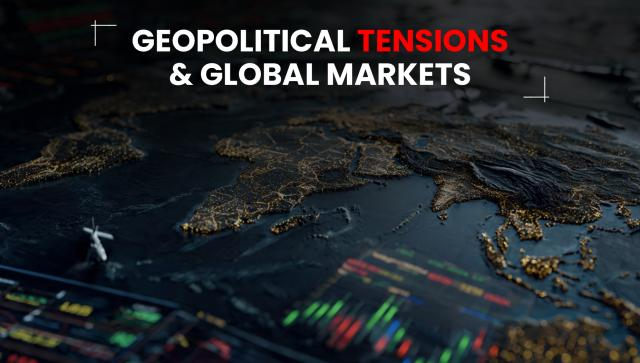
Fragile Peace, Volatile Markets: Navigating Global Uncertainty Post the US-Iran Bürgenstock MOU
The signing of the recent Memorandum of Understanding (MOU) between the United States and Iran and the subsequent intense, overnight technical rounds at the Bürgenstock resort in Switzerland was intended to bring a collective sigh of relief to global financial markets. Marking a framework to end months of severe military escalation and secure safe passage through the vital Strait of Hormuz, the diplomatic breakthrough has instead exposed a deep,structural fragility.
Rather than cementing long-term stability, the highly conditional 60-day roadmap toward a final agreement has highlighted the unpredictable nature of current geopolitics. With U.S. President Donald Trump reiterating warnings that the U.S. could resume strikes if terms are breached, and Tehran responding with sudden, tactical closures of the Strait, the lines between de-escalation and renewed conflict remain dangerously blurred. For traders and investors, this structural ambiguity does not mean clarity it means navigating a minefield of market noise.
The Psychology of the "Fragile Agreement" in Global Trading
Financial markets rarely crash solely because of bad news; they plunge or freeze because of unquantifiable risk. A fragile, highly conditional MOU creates a unique psychological burden for market participants due to several distinct factors:
● 60-Day Countdown Anxiety: Because the Switzerland talks only secured a temporary framework with a hard 60-day deadline to hammer out a final settlement, every piece of political rhetoric over the next two months acts as a micro-catalyst for market volatility.
● Headline Trigger Risk: Algorithms and human desks are trapped in a reactive loop. When President Trump notes that "you won't have a country" if commitments are broken, or when Iranian officials assert conflicting interpretations regarding maritime "fees" vs. "tolls" in the Strait, capital allocations shift instantly.
● Hedging Over Directional Bets: Institutional fund managers are choosing to pay a premium for defensive hedging strategies rather than placing high-conviction, long-term directional bets on growth assets.
Market Expectations Across Key Asset Classes
As the technical committees in Switzerland attempt to iron out the finer points of nuclear infrastructure dismantlement and sanctions relief, key financial instruments are reacting directly to the geopolitical premium.
1. Global Equities:
While broad indices initially cheered the initial headlines of a signed memorandum, the rally has remained strictly capped. Broad-market equities are experiencing defensive sector rotation. Heavy cyclical sectors and transport/logistics stocks remain highly sensitive to shipping lane security. Until the 60-day window closes with a fully binding, signed international treaty, upside momentum for major global equity indices will likely face strong resistance, with investors taking quick profits at local highs.
2. USD/JPY:
The USD/JPY currency pair serves as the ultimate barometer for geopolitical anxiety, pitting the world’s primary reserve currency against the traditional Asian safe-haven asset, the Japanese Yen (JPY).
● Mechanism: When the US-Iran rhetoric sharpens, capital flows directly into the liquidation of risk assets, heavily favoring the Yen via unwinding carry trades.
● Outlook: Despite the structural yield differentials that typically favor the greenback, USD/JPY faces sharp downside spikes whenever Swiss negotiations hit a roadblock. If the MOU fractures, expect a rapid flight to safety that strengthens the Jen, dragging USD/JPY lower.
3. GBP/USD:
The Cable (GBP/USD) is highly sensitive to shifts in global risk sentiment and energy-driven inflation dynamics.
● Mechanism: The UK economy remains highly exposed to imported energy cost shocks. Any renewed threat to the Strait of Hormuz risks driving up Brent crude prices, stoking inflationary pressures that complicate the Bank of England's policy pathway.
● Outlook: Because the US Dollar gains haven status during outright military escalations, a breakdown in the Switzerland framework would likely trigger a sharp sell-off in GBP/USD as capital flees to greenback liquidity. Conversely, a smooth technical progression over the 60-day horizon would sap the dollar's risk-premium, offering GBP/USD a pathway to recover toward key resistance levels.
4. XAU/USD (Gold):
Gold has reasserted its role as the premier geopolitical hedge. The ambiguity embedded within the current MOU is highly supportive of the metal's underlying structure.
● The Outlook: Even with temporary pullbacks on positive diplomatic headlines, the baseline support for XAU/USD remains incredibly firm. Investors recognize that the baseline terms spanning massive fund commitments, frozen asset releases, and complete uranium stockpile adjustments are so complex that a flawless execution is statistically unlikely. Any formal operational hitch or sudden violation of the temporary ceasefire will instantly propel spot gold prices upward as institutional desks rush to
park capital in non-sovereign hard assets.
Strategic Takeaway for Forex and Capital Allocators
In an environment dictated by temporary memorandums, sudden social media pronouncements, and conditional 60-day clocks, standard technical patterns frequently break down. For brokerages and individual market participants alike, risk mitigation takes absolute precedence.
The primary rule of a fragile peace is that market leverage must be tightly controlled. Until the technical parameters debated at the Bürgenstock resort materialize into an unconditioned, permanent diplomatic reality, the markets will continue to price in an "ambiguity premium" ensuring that volatility remains the only true certainty.