UK Political Turbulence and way forward for Pound
 Jun 26th, 2026
 5 mins


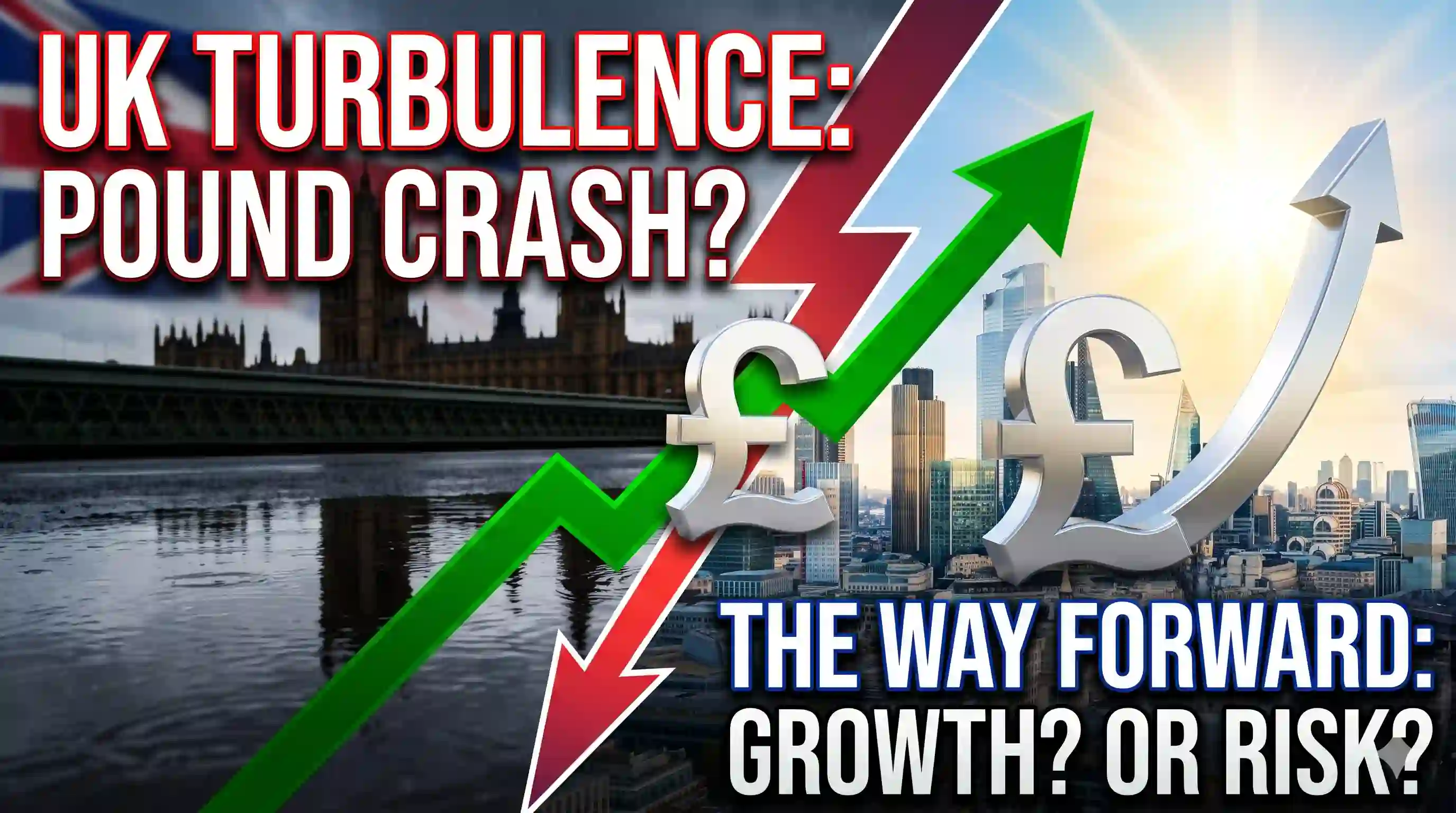
The British political landscape has been upended once again. Less than two years after securing a historic general election victory, Prime Minister Sir Keir Starmer has resigned following intense pressure over policy missteps, internal division, and bruising local election results. In this sudden vacuum, the ruling Labour Party has turned its gaze to Andy Burnham, the former Mayor of Greater Manchester widely known as the “King of the North.”
Having successfully transitioned back to Westminster by winning a decisive by-election in Makerfield, Burnham is currently the uncontested favorite to become the UK's next Prime Minister by mid-July. However, as he prepares to inherit Nigel Farage’s Reform UK party is rapidly gaining ground, posing a structural challenge to the traditional two-party system ahead of the 2029 general election.
Who is Andy Burnham, and How Good is His Record?
Unlike Starmer, whose political brand was deeply rooted in the legal system, Burnham relies heavily on an approachable, man of the people persona. Born to a working-class family in Lancashire his father a telephone engineer and his mother a receptionist Burnham studied English at Cambridge before entering politics. He spent 16 years as an MP and served in Gordon Brown’s cabinet as Health Secretary, but his modern political identity was forged during his nine years running Greater Manchester. Supporters look to his mayoral record as proof of his leadership capabilities:
● Urban Regeneration: Under his tenure, Manchester's skyline expanded rapidly with new infrastructure and commercial growth.
● Bee Network: In a highly publicized move, he used local powers to reverse decades of deregulation, bringing the regional bus network entirely back under local public control.
● Pragmatic Governance: He earned high praise for working collaboratively across party lines and successfully demanding devolved powers directly from Whitehall.
The Westminster Criticism
However, Burnham’s critics offer a more cautious view. Some former Westminster colleagues argue that he is who prioritizes public approval over tough administrative choices. His previous leadership runs in 2010 and 2015 failed to convince the wider party, and his ministerial record under Gordon Brown faced scrutiny during hospital management scandals. Furthermore, running a municipal region is fundamentally different from managing national defense, global foreign policy, and macroeconomics areas where Burnham has very limited exposure.
Burnham is closely associated with the soft-left faction of the Labour Party. He rejects traditional trickle-down economics, arguing that decades of centralized Westminster directives have broken the link between national economic growth and local public welfare.
Instead, he champions a philosophy he terms "Manchesterism" the belief that social progress and economic progress must happen simultaneously.
To achieve this, Burnham advocates for:
● Public Utility Control: Increased state and local intervention in core infrastructure, including housing, energy, and water.
● Dismantling Whitehall Orthodoxy: Radical state reform. He has openly criticized Treasury for focusing heavily on spending constraints rather than regional growth, even floating the idea of appointing left-wing figures like Ed Miliband as Chancellor to challenge traditional Treasury policies.
● Political Reform: Supporting proportional representation, changing the parliamentary system, and replacing the House of Lords.
Reform UK and the Road to 2029
While Burnham represents a fresh start for a fractured Labour Party, his most significant challenge will not come from across the aisle in the form of the Conservatives. It will come from Reform UK.
Recent YouGov Westminster voting intention polls show a remarkable political shift: Reform UK has led multiple polls, capturing up to 27% of the vote, while both Labour and the Conservatives have languished near 18%. Nigel Farage has already capitalized on Starmer's exit, demanding an immediate general election and claiming the country is drifting from crisis to crisis. While Burnham has ruled out calling an early vote, Reform UK's strong polling numbers show that public anger over immigration, a sluggish economy, and the cost-of-living crisis is rising.
Why 2029 Could Be a Disruptive Election
Historically, minor parties struggle to convert high poll numbers into actual parliamentary seats under the UK's First-Past-the-Post voting system. However, Reform UK is building deep momentum in working-class, pro-Brexit heartlands the exact voter base Burnham had to win back in Makerfield.
If Burnham fails to rapidly improve public services and ignite growth within his first two years in office, the anti-establishment sentiment fueling Reform UK will only grow, transforming them from a populist protest group into a legitimate contender for power in 2029.